
Compost as Topdressing: The Soil's Grocery Store
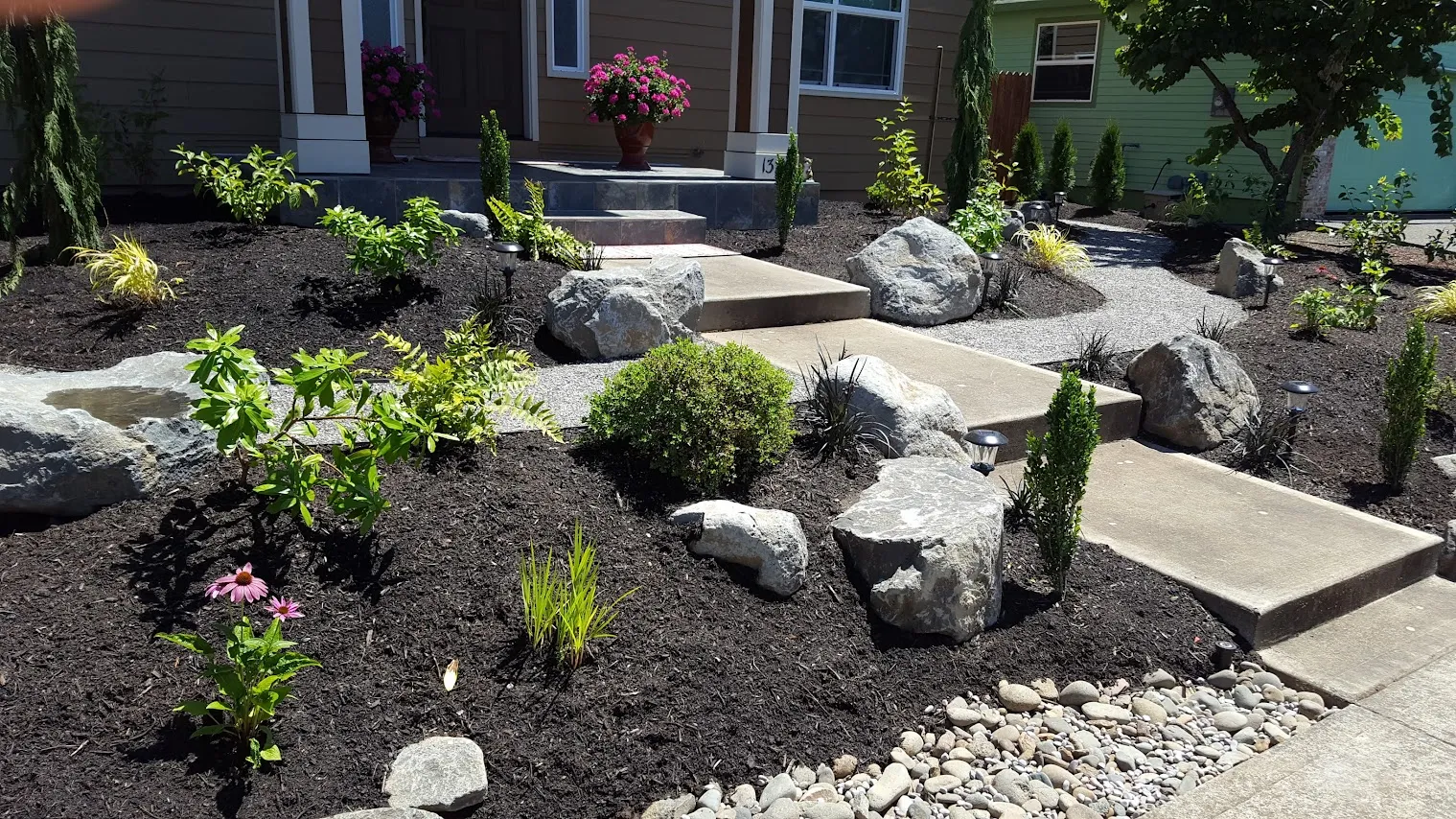
Feed the soil, not just the plant
Walk down the garden aisle and almost everything is aimed at the plant: bags of blue crystals, spikes, “bloom booster.” Those have their place — they’re a quick response when something needs a push. But the fast stuff feeds one meal; it doesn’t build anything. The lasting work happens in the soil, and healthy soil is alive: billions of microbes, threads of fungi, and earthworms turning organic matter into the nutrients roots actually take up.
Supplement that quick green-up with a real food source and you build something a bag can’t: biodiversity underfoot. Think of the living soil as a grocery store your plants shop at — compost is how you keep the shelves stocked.
What “topdressing” actually means
Topdressing is a thin layer of finished compost spread over the surface of a bed or lawn and left there. You don’t dig it in — rain, worms, and time carry it down for you.
It helps to know how it differs from its two cousins:
- Mulch is a thicker blanket, usually bark, that holds moisture and blocks weeds. It protects the soil (and slowly feeds the fungi in it).
- Fertilizer is a fast, concentrated hit — useful for a push, but it can burn, and a lot of it washes away before roots ever use it.
- Compost sits in between: a gentle food layer that also builds the soil itself.
Why the slow way wins
- No burn, no waste. Compost releases as the microbes work through it — no fertilizer burn, no wash-off, no feast-then-famine swing.
- It fixes the dirt, not just the plant. Compost helps heavy clay drain and loose sand hold water, and both hold onto nutrients longer. That matters here: our clay soils and long, wet winters leach nutrients away, and compost buffers the loss.
- It feeds the whole crew. Worms and microbes multiply, and they’re the ones aerating your soil and defending roots against disease.
- It starts sooner than you’d think — and keeps building. Compost isn’t the instant jolt of an inorganic fertilizer, but it doesn’t sit idle either: microbes begin breaking it down and feeding roots within the same season. The deeper payoff — the fungal networks that bark and compost feed — builds over one to three years. It’s a natural process, not a silver bullet, and the returns compound season over season.
How to do it — yard or no yard
- Beds and borders: no need to pull the mulch back — spread compost right over the top, anywhere from a quarter-inch to a couple of inches deep depending on the area, your budget, and your goals. Water it in and let it work down. Once a year, spring or fall.
- Lawns: a fine, screened-compost topdress right after aeration falls straight into the holes, where it feeds the turf and helps the soil cycle nutrients better — the quiet foundation of a lawn that stays healthy over the long run.
- Just a pot on the balcony? Same idea, smaller: scrape off the top inch of tired potting mix and replace it with compost. Your tomatoes and herbs will notice.
Two rules either way: keep compost off tree trunks and plant crowns — it’s a food layer, not a burial — and don’t dig it in. Let the soil do the tilling. That’s its whole job.
The stewardship move
At heart, topdressing with compost is simply good stewardship. Whether you own the home, care for the property, manage the grounds, or run the business behind them, feeding the soil protects what’s already planted and keeps everything looking fresh and cared-for, season after season — healthy soil below, sharp-looking grounds above. It’s one of the quietest, highest-return habits in landscaping.
When to call us
Spreading compost is simple in principle. Doing it across a whole property — sourcing good finished compost, hauling it, and working it evenly around established plants — is a real day of labor. That’s the part we take off your hands.
We top-dress beds so two things happen at once: your yard looks fresh and finished the day we leave, and the soil microbes underneath get a feast that keeps paying you back for seasons. It isn’t the cheapest line on a maintenance plan — but for a landscape you intend to keep, it’s one of the best-value things you can do for it.
We care for beds and gardens from Woodburn up to Lake Oswego and Newberg over to Oregon City, and estimates are free. Curious what steady care actually gives you back over the years? Read Caretaking Your Landscape.