
Level Up: Why Pavers and Steps Settle — and How to Fix Them Right
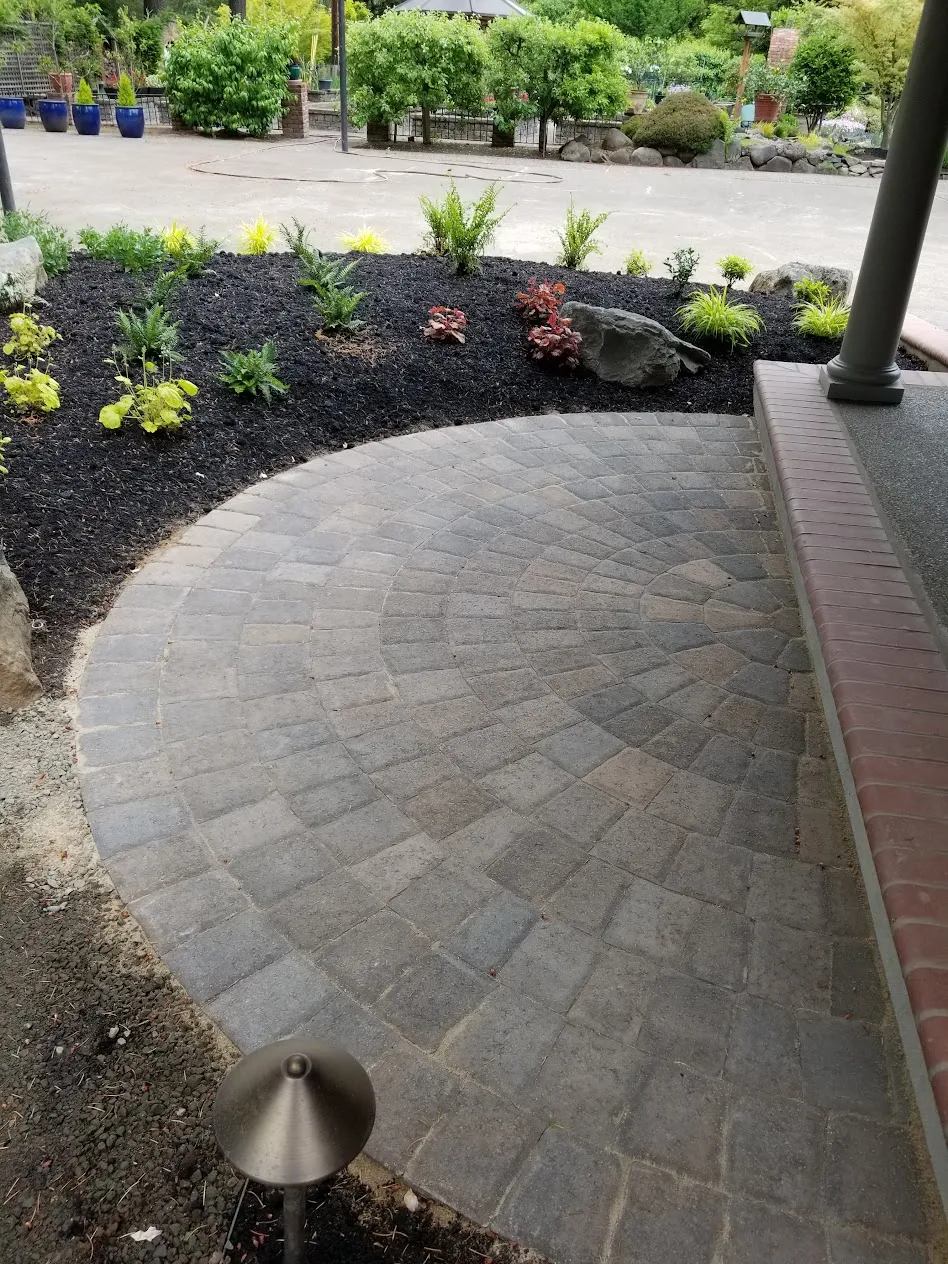
The dip that wasn’t there last year
You know the spot. The corner of the patio that’s started to pool water after a rain. The step that sits a half-inch low — just enough to catch a toe in the dark. The paver that rocks when you cross it, or the walkway that’s picked up a slow wave. None of it happened overnight, and here’s the good news: the pavers themselves are usually fine. What moved is underneath them.
It’s not the surface — it’s the base
A paver patio or a run of steps is only as level as the compacted base it sits on. When hardscape settles, the base is what shifted. Around here, the usual suspects are:
- A base that was rushed. If the gravel base wasn’t deep enough, or wasn’t compacted in the right layers, it keeps compressing under use for years.
- Water — practically our state climate. Roof runoff and poor drainage wash the fine material out from under the base, and winter freeze-thaw heaves what’s left.
- Roots and erosion. A nearby tree lifts one section; a slope erodes and drops another.
- A failed edge. When the edge restraint lets go, pavers spread and drift, and the joints open up.
How to read your own hardscape
Walk it and look for a step that’s no longer even with its neighbors, a patio that now tilts toward the house instead of away from it, joints that have opened or filled with weeds, a low spot that holds a puddle a day after the rain, or any piece that rocks underfoot. Any one of those is the base talking.
The right fix vs. the quick patch
Here’s where it pays to know the difference:
- The quick patch: sweep some sand in the gaps, shim the wobble, top it off. It looks better for a few weeks — but the base is still bad, so the dip comes right back.
- The real fix: lift the affected pavers, rebuild and re-compact the base, correct the grade so water runs the right way, then reset the same pavers and lock them in with fresh joint sand and solid edge restraint.
The best part of a proper reset: you already paid for good pavers or stone. Done right, they get reused — you’re buying back a sound foundation, not a whole new patio.
What you get back
- Safety first — no trip lip at the steps, no rocking paver underfoot.
- Water where it belongs — draining away from your foundation instead of pooling against it.
- Your investment protected — a reset saves the materials you already own instead of replacing them.
- A finished look again — even surface, crisp joints, clean lines.
- It stays put — fixed at the base, it doesn’t creep back next winter.
Cheap now vs. right once
We understand the temptation to just patch it — it’s less money today. But if the base isn’t addressed, the same low spot is back in a season or two, and now you’ve paid twice. Fixing the cause once is the cheaper road over time, not the more expensive one.
When to call us
If your patio’s grown a puddle, your walkway’s gone wavy, or a step feels off underfoot, that’s a base problem worth a look — and it’s very fixable, usually with the materials already in place. We reset and re-level pavers, steps, and patios across the valley — Woodburn to Lake Oswego, Newberg to Oregon City. The quickest way to know what yours needs is a free on-site look: request an estimate or give us a call at (503) 678-7744.