
Watering Deep, Mowing High: Getting Your Yard Through a Willamette Valley Summer
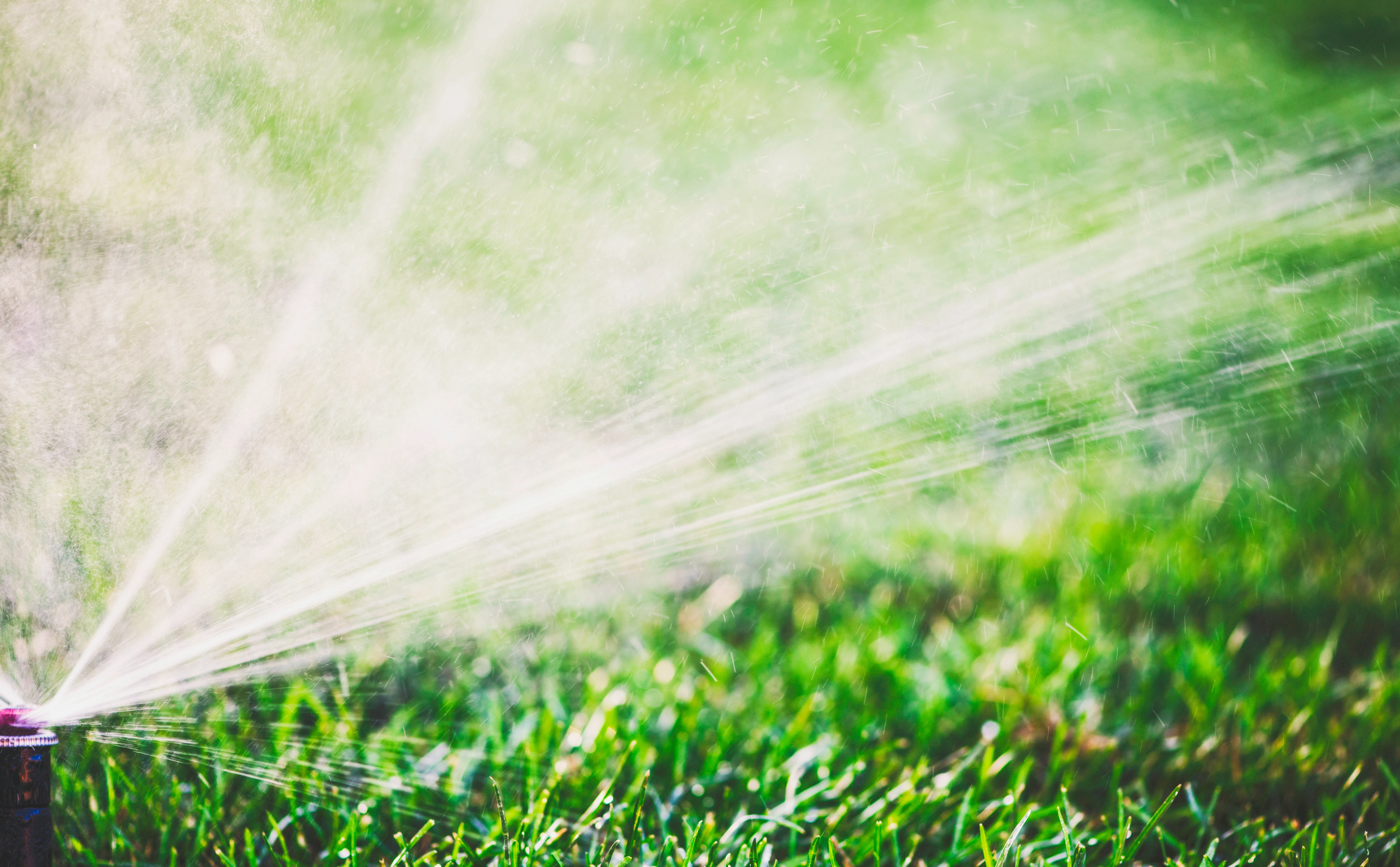
The July problem
Every July we get the same calls: the lawn that looked perfect in May is going patchy, the water bill jumped, and the pond has a green tint it didn’t have three weeks ago. None of that is bad luck — it’s the same three habits, and all of them are fixable this weekend.
Water deep, not daily
A lawn wants about an inch of water a week in summer — delivered in one or two deep soakings, not a daily sprinkle. Shallow, frequent watering trains roots to live in the top inch of soil, which is exactly the layer that bakes first in an Oregon heat wave. Deep soakings push roots down where the moisture holds.
The tuna-can test still works: set a few empty cans around a zone, run it, and time how long an inch takes. That’s your number. Split it into two mornings a week and you’re done — early morning, before the wind and heat steal half of it.
Mow high — three inches or better
Cutting short doesn’t make a lawn neater in summer; it makes it thirstier. Taller grass shades its own crowns and soil, so it stays cooler, loses less water, and out-competes the weeds that love scalped turf. Set the deck at three inches or higher, keep the blade sharp, and never take more than a third of the height in one pass.
The 15-minute irrigation walk
Once a month in summer, run each zone for a few minutes and just watch: a clogged nozzle, a head knocked crooked by the mower, a geyser where a fitting let go. One broken head can quietly brown out a corner for weeks — or pour hundreds of gallons into the street. If a zone’s pressure seems weak or the coverage is patchy and you can’t see why, that’s usually a below-ground issue worth a professional look.
Meanwhile, at the pond
Heat plus long days is string-algae season. Don’t reach for chemicals — keep the water moving, top off what evaporation takes (slowly, so you don’t shock fish with cold tap water), and let plants do the shading. If your fish are in the pond, feed lighter than you think: warm water slows their digestion. A pond that’s healthy in July is mostly a pond that was set up right — good turnover, real biological filtration, and enough plant cover.
When to call us
If your system needs more than a nozzle swap — weak zones, a controller from another decade, coverage that never was right — a mid-summer tune-up pays for itself in water saved. We service irrigation across the valley — Woodburn to Lake Oswego, Newberg to Oregon City — and estimates are free. Pond looking tired instead? That’s our specialty.